
Tectónica y sismicidad en la Región Volcánica Paricutín - Tancítaro, Michoacán, México
DOI:
https://doi.org/10.35830/cn.vi82.556Resumen
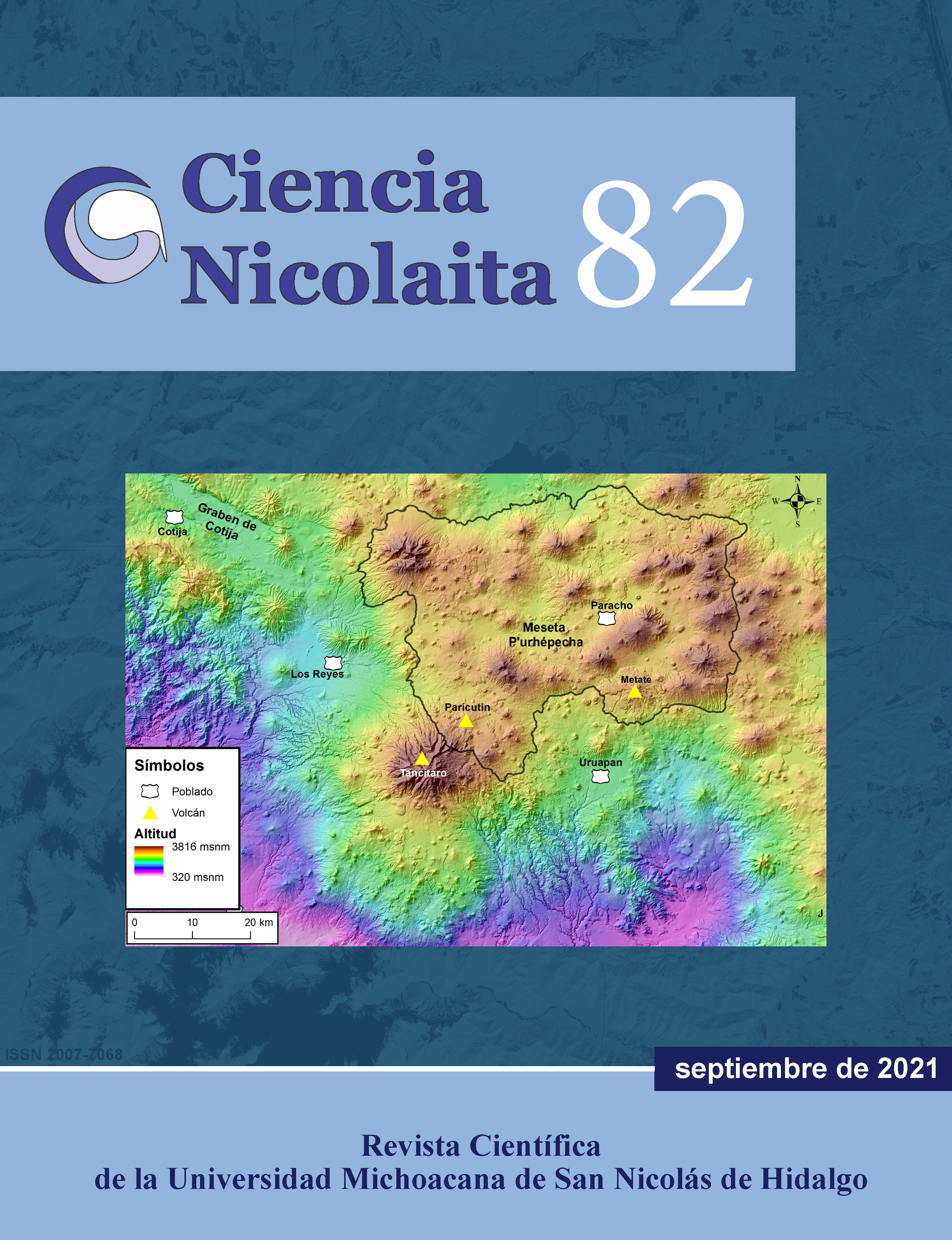
Las regiones tectonomagmáticas activas se caracterizan por presentar sistemas de fallamiento regionales, actividad sísmica y vulcanismo recurrente. La Región Volcánica Parícutin - Tancítaro es una zona estructuralmente compleja y con alta densidad volcánica, que se localiza en el Campo Volcánico Michoacán Guanajuato dentro del sector central del Cinturón Volcánico Transmexicano. En este trabajo se presenta una revisión morfotectónica y sísmica de la Región Volcánica Parícutin - Tancítaro. En esta región coexisten dos sistemas de fallamiento regionales: 1) el Sistema de Fallas Cotija-Nueva Italia, el cual agrupa estructuras con orientación NO-SE y actúa como límite entre el dominio de la Meseta P'urhépecha hacia el norte y los dominios del Graben de Peribán - Los Reyes y la Depresión del Bajo Balsas hacia el sur. 2) El Sistema de Fallas Tepalcatepec-Tangancícuaro, el cual agrupa estructuras con orientación NE-SO, incluyendo abundantes lineamientos volcánicos en la misma dirección y aparentemente condiciona el desarrollo del Graben de Peribán - Los Reyes.
La Región Volcánica Parícutin – Tancítaro presenta una intensa actividad sísmica y se ha caracterizado por haber registrado al menos 7 enjambres sísmicos en los últimos 80 años. Independientemente de la precisión de su ubicación y relativa profundidad de ocurrencia, los enjambres sísmicos se traslapan con los dos sistemas de fallamiento descritos, así como con la presencia de lineamientos volcánicos con edades del Pleistoceno tardío, Holoceno e inclusive recientes (p.ej. los volcanes Parícutin (1943-1952), Pedregal (470-710), Astillero (620-680), Metate (1000-1600)). La concurrencia y recurrencia de los tres elementos tectonomagmáticos sugiere fuertemente que las estructuras tectónicas facilitan el ascenso y emplazamiento de magmas, probablemente asociado con reservorios someros a 4-5 km, 9-10 km y 14-16 km. Dicho escenario conlleva la presencia de peligros geológicos inherentes ligados al vulcanismo y la sismicidad que pueden afectar a las comunidades asentadas en la región. Por lo tanto, se recomienda vigilar la evolución de los procesos tectonomagmáticos en la Región Volcánica Parícutin - Tancítaro por medio de instrumentación geofísica y un análisis permanente de todos los datos.
Descargas
Descargas
Publicado
Cómo citar
Número
Sección
Licencia
Derechos de autor 2021 Daniel Alberto Gómez Calderón, Diana Cinthia Soria Caballero, Pedro Corona Chávez

Esta obra está bajo una licencia internacional Creative Commons Atribución-NoComercial-CompartirIgual 4.0.
Universidad Michoacana de San Nicolás de Hidalgo, Coordinación de la Investigación Científica, Av. Francisco J. Mujica, Edificio "C-2", Ciudad Universitaria, Morelia, Michoacán, México, C.P. 58030. Todos los derechos reservados. Esta revista puede ser reproducida con fines no lucrativos, siempre y cuando se cite la fuente completa y su dirección electrónica. De otra forma requiere permiso previo por escrito de la institución y autor.

Este obra está bajo una licencia de Creative Commons Reconocimiento-NoComercial-SinObraDerivada 4.0 Internacional.