
Chia in biological collections, a window into the study of its domestication
DOI:
https://doi.org/10.35830/cn.vi96.887Keywords:
inflorescencia, núcula, silvestre, cultivado, gradiente de domesticaciónAbstract
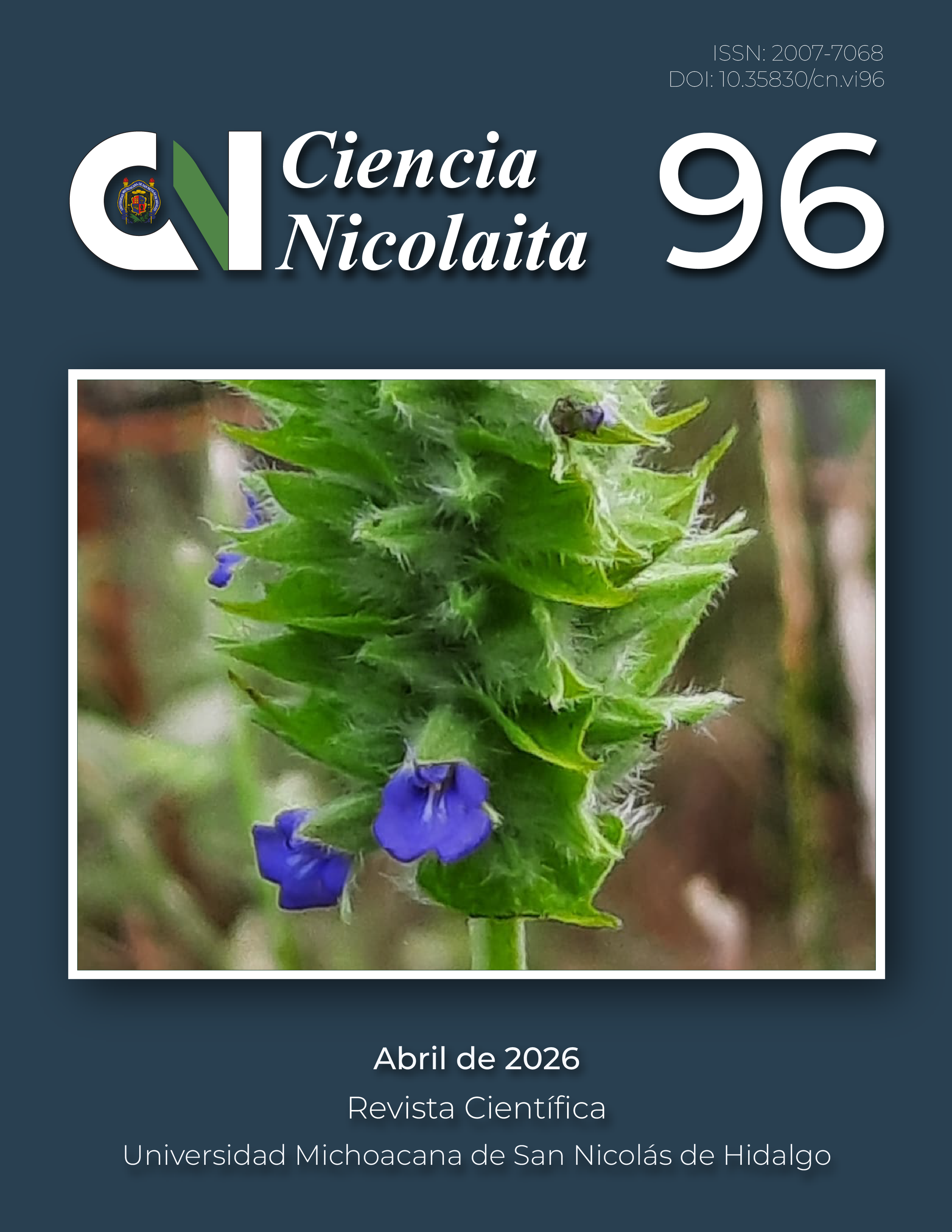
Salvia hispanica L., known as chia, is a plant domesticated since at least 3,700 years ago, and it has been managed in a persisting gradient from wild populations and intermediate in situ management to cultivattion. We wanted to know if specimens at public collections belong to wild plants. To evaluate this, we studied 10 domestication traits and vigor related to the plant and the inflorescence in digitalized herbaria specimens. We conducted the analyses using PAST software, and the resulting dendrogram showed no clustering of the categories of wild, intermediate and cultivated plants. Nevertheless, according to the MANOVA analysis and the paired test, significative differences exist, except for distinguishing intermediate from cultivated material. Inflorescence lenght, number of verticillasters, and number of flowers per verticillaster are the characters that better explain the variation. We confirm that the majority of the herbarium specimens belong to wild plants, and that the species possesses considerable morphological variation or phenotypic plasticity and does not show the homogeneity that a fully domesticated crop would be expected to display.
Downloads
Downloads
Published
How to Cite
Issue
Section
License
Copyright (c) 2026 Sabina Irene Lara Cabrera, Geraldine Murillo Suárez, Yocupitzia Ramírez Amezcua

This work is licensed under a Creative Commons Attribution-NoDerivatives 4.0 International License.
Universidad Michoacana de San Nicolás de Hidalgo, Coordination of Scientific Research, Av. Francisco J. Mujica, Building "C-2", Ciudad Universitaria, Morelia, Michoacán, México, C.P. 58030. All rights reserved. This magazine may be reproduced for non-profit purposes, as long as the full source and its email address are cited. Otherwise it requires prior written permission from the institution and author.

This work is licensed under a Creative Commons Attribution-NonCommercial-ShareAlike 4.0 International License.