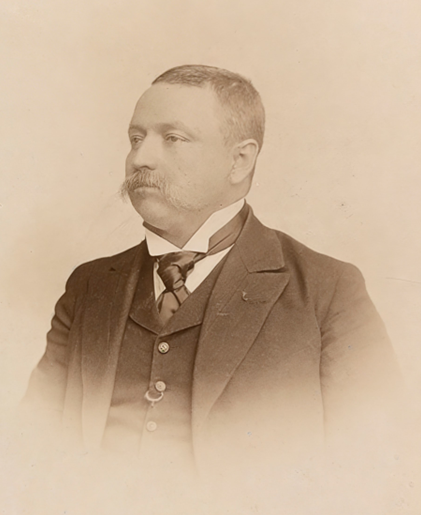
Felipe Rivera and the development of astronomy in Mexico
DOI:
https://doi.org/10.35830/cn.vi96.911Keywords:
Felipe Rivera, astronomía, estrella temporaria, Nova Persei, ciencia provincialAbstract
During the 19th century, knowledge spread throughout the national territory through books that arrived from the most advanced countries in terms of sciences, providing Mexican scholars with an interest in scientific knowledge. The present text reviews the history of astronomy in Mexico focusing on Felipe Rivera, who from Zinapécuaro, a town in the east of Michoacán, made contributions to the development of scientific knowledge, such as the discovery of a temporary star in the constellation Perseus on February 24, 1901, an event that gave him national renown and led to the creation of the Astronomical Society of Mexico. Rivera acted as a promoter of science not only locally but nationally, being an active participant in numerous scientific activities that served as a breeding ground for future scientists in the country.
Downloads
Downloads
Published
How to Cite
Issue
Section
License
Copyright (c) 2026 Natalia Aguilar López

This work is licensed under a Creative Commons Attribution-NoDerivatives 4.0 International License.
Universidad Michoacana de San Nicolás de Hidalgo, Coordination of Scientific Research, Av. Francisco J. Mujica, Building "C-2", Ciudad Universitaria, Morelia, Michoacán, México, C.P. 58030. All rights reserved. This magazine may be reproduced for non-profit purposes, as long as the full source and its email address are cited. Otherwise it requires prior written permission from the institution and author.

This work is licensed under a Creative Commons Attribution-NonCommercial-ShareAlike 4.0 International License.